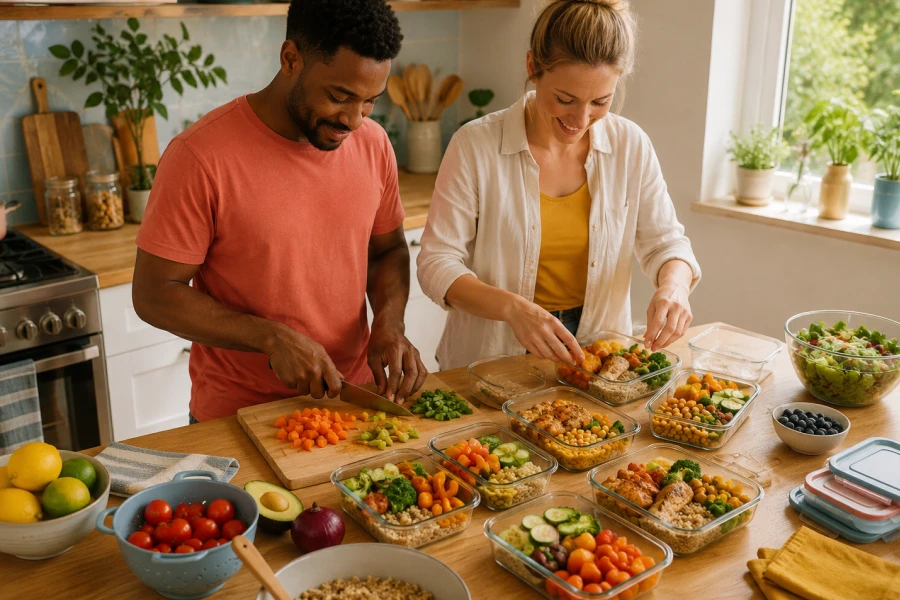
Successful family meal planning for busy parents starts with real life, not fantasy. Families have late meetings, homework, practices, and tired evenings. A perfect plan rarely survives the week untouched. A flexible system performs much better. It gives parents direction without creating guilt. It also helps children know what to expect. Meals become easier when decisions happen earlier. Grocery shopping becomes faster and more focused. Cooking feels less like a nightly emergency. With the right rhythm, dinner becomes manageable again.
Backups make meal planning realistic. Every family needs meals for chaotic evenings. These options should be simple and dependable. Eggs, pasta, soup, and wraps can help quickly. Frozen vegetables can complete a meal fast. Parents should not view backups as failure. They are part of a smart system. Practical meal prep for families supports that mindset. A prepared fallback prevents stress from controlling dinner. Flexibility keeps the whole plan alive.
Shopping becomes easier when meals share ingredients. One bag of carrots can support several dishes. A protein can appear in tacos and lunch bowls. Yogurt can work for breakfast, snacks, and sauces. This overlap reduces waste. It also shortens the grocery list. Parents spend less time scanning aisles. Children may enjoy recognizing ingredients across meals. The week feels more connected and less scattered. Smart shopping begins before entering the store.
New recipes can be exciting for adults. Children often prefer meals that feel familiar. Planning should include trusted family favorites. Then parents can adjust nutrition gradually. Add beans to quesadillas. Add spinach to pasta sauce. Serve fruit with breakfast foods. Small steps create less resistance. Familiar meals offer comfort after busy days. A recognizable plate often makes dinner calmer.
Children cooperate more when they have some choice. Parents can offer two meal options. Kids can pick a vegetable or side. Older children can help pack lunches. Younger ones can place fruit in containers. Participation does not need to be complicated. It simply helps children feel respected. Ideas for cooking together activities can make that involvement smoother. Choice builds ownership. Ownership often reduces mealtime battles.
Decision fatigue makes cooking feel heavier. Parents already make countless choices each day. Dinner should not require fresh creativity every night. Theme nights can solve this problem. Mondays may be bowls. Tuesdays may be tacos. Wednesdays may be pasta. The format stays familiar while ingredients change. This gives families variety without chaos. It also helps children anticipate meals. Less guessing creates a calmer evening routine.
Habits matter more than occasional perfect meals. A workable plan helps families eat consistently well. It also lowers dependence on last-minute choices. Children see healthy food as part of normal life. Parents feel less pressure to reinvent dinner. Useful busy parent meal planning tools can keep momentum steady. The system should evolve with seasons. Sports weeks may need faster meals. Quiet weeks may allow more cooking. Sustainable planning respects both health and reality.



Leave a comment