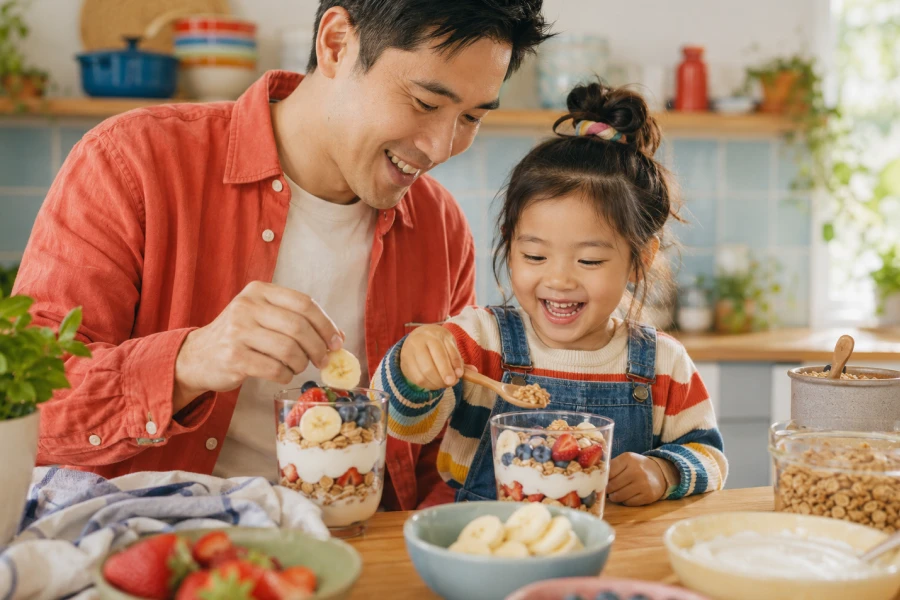
Thoughtful cooking with kids activities can change how children experience healthy food. Many kids resist nutrition when it feels like instruction. They respond better when food becomes hands-on and playful. A simple task can spark curiosity. Stirring, sprinkling, washing, and assembling all count. Parents do not need elaborate projects. They need safe moments that invite participation. Cooking together builds confidence around ingredients. It also creates memories beyond the meal itself. Healthy eating becomes more attractive when children help create it.
Children often taste foods they helped prepare. Participation makes unfamiliar ingredients feel less suspicious. A carrot looks different when a child washes it. Yogurt feels more exciting after mixing fruit into it. These small experiences build comfort. Parents can use them without forcing bites. The focus should stay positive and relaxed. Support for picky eater solutions can make this process easier. Children need repeated exposure. Playful preparation gives that exposure a happier tone.
Every age can help in the kitchen. Toddlers can pour premeasured ingredients. Preschoolers can tear lettuce or mash bananas. Early readers can find items on a recipe card. Older children can learn safe knife skills. Teens can prepare simple meals independently. The key is matching tasks to ability. Parents should expect mess and movement. That expectation keeps frustration lower. Age-appropriate jobs make cooking feel empowering.
A calm kitchen starts before cooking begins. Clear the workspace first. Choose one simple task for each child. Keep sharp tools out of crowded areas. Explain safety before excitement takes over. Short activities usually work better than long ones. Parents can prepare ingredients ahead. That keeps kids engaged without waiting too long. A predictable setup reduces stress. Calm routines make family cooking easier to repeat.
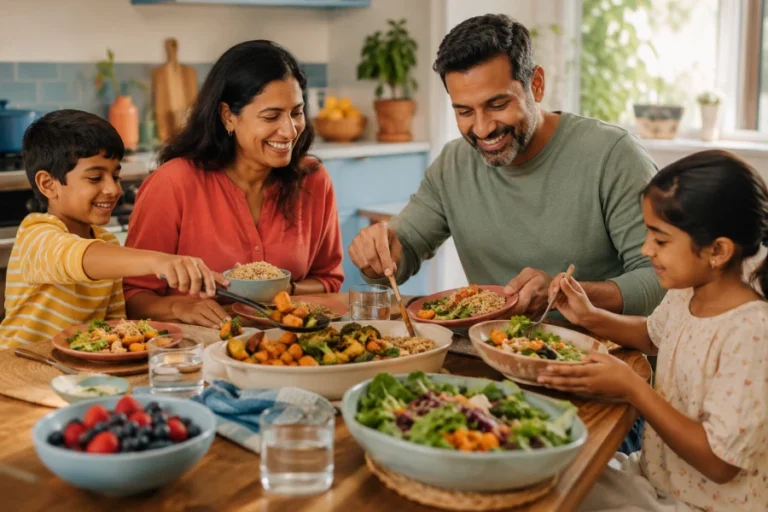
Children understand food better when they see ingredients. A smoothie shows fruit, yogurt, and milk coming together. A salad shows color, crunch, and variety. A wrap shows how protein and vegetables fit. Parents can talk about energy without lecturing. Simple language works best. Mention how foods help bodies play, think, and grow. Ideas for simple nutritious meals keep those lessons practical. Children learn by seeing. The plate becomes a friendly classroom.
Pride changes how children approach meals. A child who added toppings may feel invested. Another who stirred sauce may announce it proudly. Parents can name the contribution during dinner. That recognition makes effort visible. It also strengthens confidence in the kitchen. Praise should stay specific. Mention patience, care, or creativity. Children learn that their help matters. This feeling can carry into future meals.
Cooking together creates shared attention. Phones can move aside for a short time. Conversation happens naturally while hands stay busy. Children may talk more freely during simple tasks. Parents get a window into their world. The meal becomes part of the connection. Inspiration for fun kitchen routines can keep that connection fresh. Not every session will be smooth. Still, the shared effort matters. Families build warmth one imperfect meal at a time.


Leave a comment